Key Takeaways for Homeowners
- •The rotten-egg odor is mercaptan, added to odorless natural gas as an early warning.
- •Never turn light switches, use phones, or light matches if you smell gas.
- •Evacuate the home immediately and call 911 and Atmos Energy from outside.
- •In Texas, licensed plumbers under a Master Plumber must repair and pressure-test gas lines.
Direct Life-Safety Protocol: What to Do If You Smell Gas
If you detect a distinct sulfur or 'rotten egg' odor inside your Duncanville home, treat it as an immediate life-safety emergency: (1) do NOT operate any electrical light switches, appliances, garage door openers, or cell phones; (2) do NOT light matches or smoke; (3) evacuate all occupants and pets from the home immediately, leaving the front door open behind you to ventilate; and (4) once safely outside and away from the structure, call 911 and the Atmos Energy emergency gas line at 1-866-322-8667. Only after Atmos Energy or the fire department has declared the property safe should you contact a licensed Texas plumber to perform pressure testing and repairs.
How to Locate and Shut Off Your Home's Natural Gas Meter
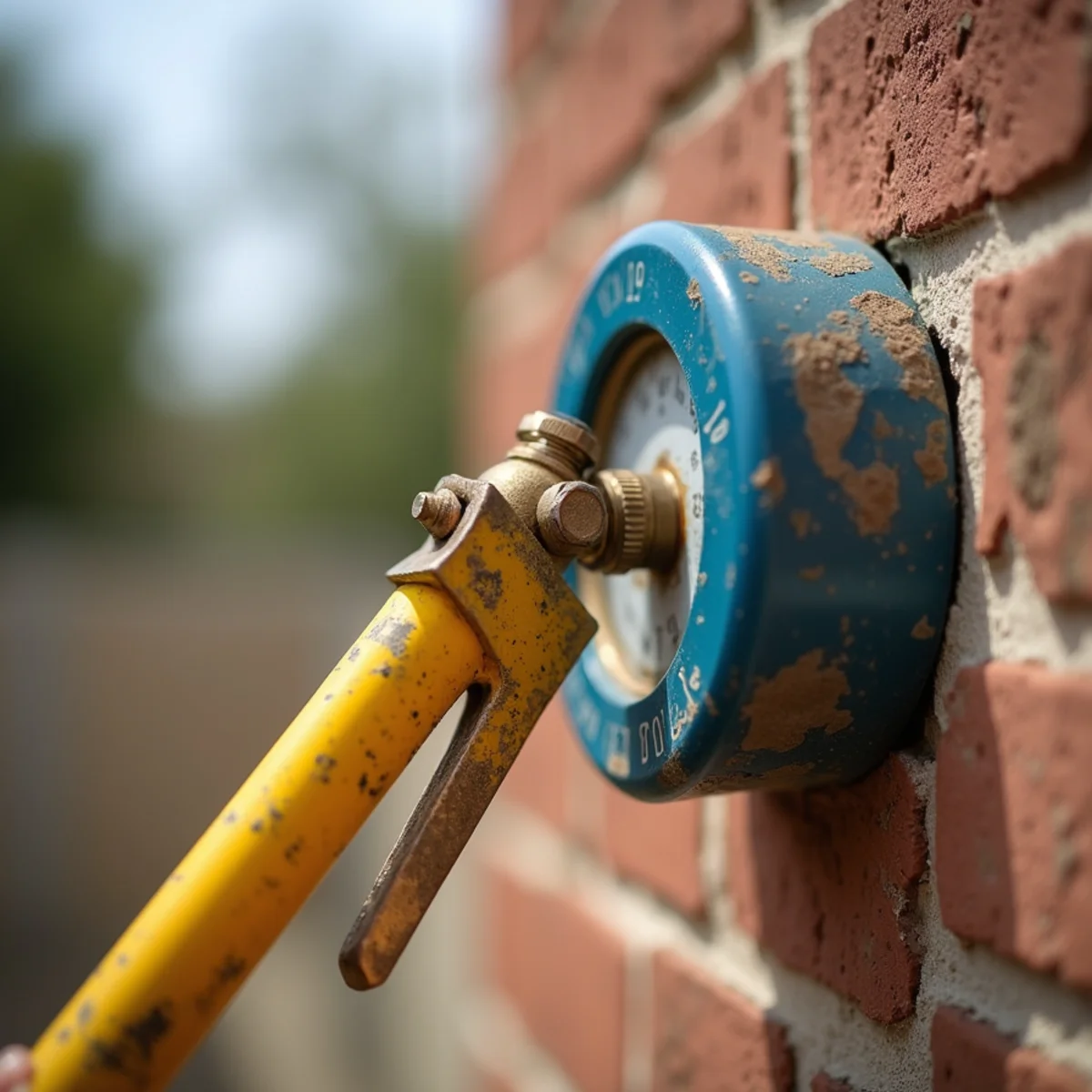
Every residential property in Dallas County served by natural gas has an outdoor gas meter, typically mounted against an exterior side or back brick wall. On the incoming vertical pipe beneath the meter body, there is a rectangular brass or cast iron valve with an oblong lug.
To shut off gas in an emergency, use an adjustable crescent wrench or non-sparking emergency gas shutoff tool. Turn the oblong lug 90 degrees in either direction until the lug is completely crosswise (perpendicular) to the vertical pipe. When the holes on the valve lug and the stationary pipe bracket align, the valve is fully closed. Never attempt to turn the gas back on yourself—only Atmos Energy or a licensed Master Plumber may re-energize the meter.
Diagnostic Testing: Digital Manometers, Gas Sniffers & Bubble Scans
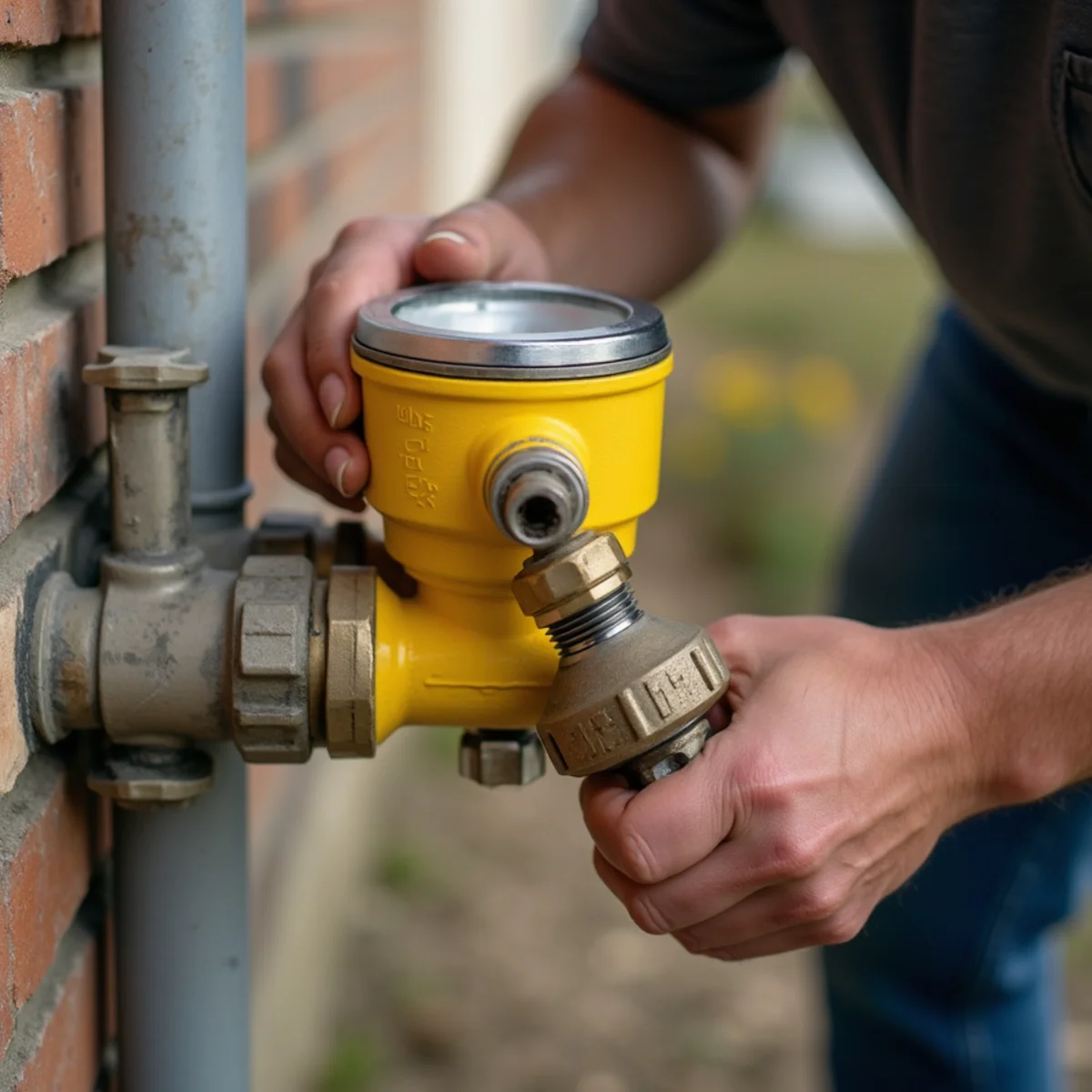
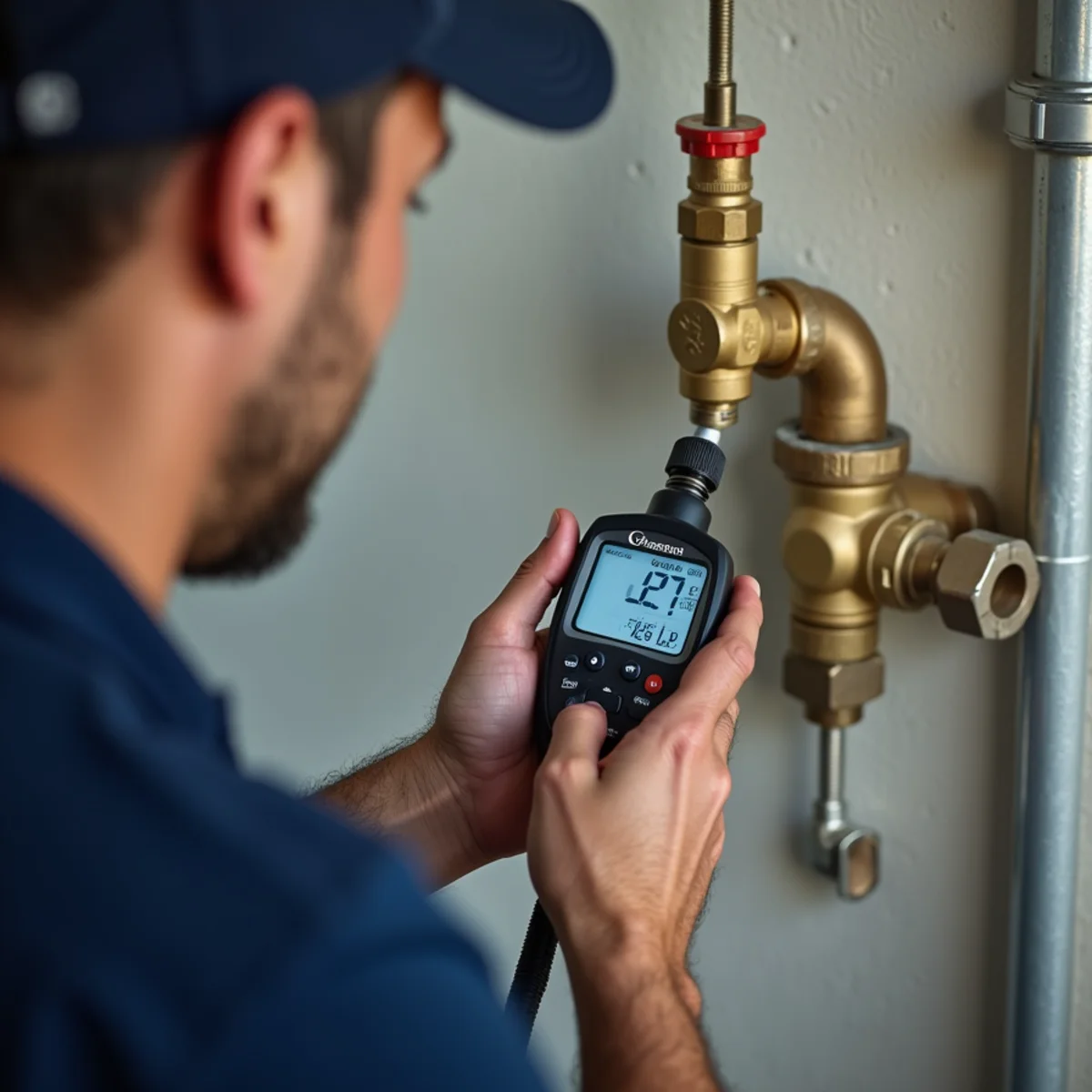
Under Texas Occupations Code, natural gas piping inside private properties must be serviced by plumbers licensed by the Texas State Board of Plumbing Examiners (TSBPE). To isolate a leak, our plumbers disconnect the gas line from appliances and connect a digital manometer to perform a gas pressure isolation test under 3 to 5 PSI.
We apply non-corrosive bubble leak detection solutions and utilize calibrated electronic combustible gas sniffers sensitive down to 5 parts per million (PPM) to locate micro-fractures in threaded black iron, copper flare joints, or corrugated stainless steel tubing (CSST).
Need Hands-On Emergency Assistance?
Speak directly with our local Duncanville dispatch desk at (858) 363-8298.
Texas Gas Plumbing Code: Permits, City Inspections & Atmos Restorations
When Atmos Energy locks out a red-tagged residential gas meter due to an interior leak, they will not legally unlock the meter or restore service until a formal process is completed: a licensed Master Plumber must pull an emergency plumbing permit with the City of Duncanville Building Inspection Department, perform the physical repairs, and pass a certified municipal air pressure gauge test.
Once the city plumbing inspector signs off with a green tag on the meter, Atmos Energy mobilizes a field technician to remove the lock, light appliance pilot lights, and verify steady distribution pressure.
Appliance Gas Flex Lines vs. Rigid Black Iron Piping
A frequent source of localized gas odors is deteriorated flexible appliance connectors behind water heaters, furnaces, and kitchen ranges. Older brass-coated flex lines manufactured before 1997 suffer from micro-cracking and galvanic corrosion.
Modern plumbing codes require all flex connectors to be stainless steel, safety-coated with polymer, and equipped with a dedicated manual ball shutoff valve within six feet of the appliance in the same room. Threaded black iron or rigid steel piping must be used for all concealed wall and attic distribution runs.
Residential Natural Gas Leak Severity & Emergency Action Guide
| Leak Scenario & Odor | Sensory / Physical Clues | Explosion & Health Hazard | Evacuation Perimeter | Immediate Required Action |
|---|---|---|---|---|
| Faint Rotten-Egg Scent (Near Appliance) | Mercaptan odor only when furnace/oven starts | Low / Moderate (Pilot ignition issue) | Remain indoors; open windows for air flow | Shut appliance angle cock; schedule plumber |
| Strong Rotten-Egg Odor (Throughout Home) | Pungent mercaptan throughout multiple rooms | Extreme / Critical (Explosive air mix) | Immediate complete building evacuation | Do NOT touch switches; call 911 & Atmos Energy |
| Hissing Sound Near Meter or Wall | Audible high-pressure gas jet sound | Severe Immediate Hazard | Evacuate 300+ feet upwind from house | Shut meter valve if safe; call 911 immediately |
| Dead Vegetation Patch in Lawn | Grass dying in circle over underground service | Subterranean line fracture | Keep vehicles away from lawn area | Call Atmos Energy emergency line from safe distance |
Why Corrugated Stainless Steel Tubing (CSST) Must Be Electrically Bonded
Many Dallas County homes built between 2000 and 2015 feature yellow-jacketed Corrugated Stainless Steel Tubing (CSST) running through attic rafters to furnaces and water heaters. While CSST is flexible and earthquake-resistant, its ultra-thin stainless steel walls are vulnerable to indirect lightning strikes common during North Texas spring storms. When lightning strikes a nearby tree or power pole, induced electrical charge travels through the earth into residential wiring. If the CSST gas piping is not electrically bonded directly to the home's electrical grounding electrode system, the electrical charge arcs between the thin corrugated pipe and nearby metal conduit or air ducts, instantly melting pinholes through the stainless steel and igniting high-pressure attic gas fires. Our licensed plumbers verify that all CSST gas systems are bonded with a minimum 6 AWG copper conductor clamped to the grounding bus.
Frequently Asked Questions
Practical answers from our local plumbing repair team.
No. Atmos Energy is responsible solely for the gas main in the street, the service line up to your meter, and the meter itself. The homeowner owns and is legally responsible for all gas piping extending downstream from the meter outlet into the home. Atmos will lock the meter for safety, but a licensed Master Plumber must execute repairs.
Related Services & Local Coverage
Explore our dedicated service options and neighboring dispatch areas:
Don't Let Plumbing Problems Escalate
Every plumber we send is licensed and insured in Texas. Upfront written price given before work starts.
Not Urgent? Send a Service Request
If your plumbing project can wait for scheduled daytime evaluation, submit your details below. We will coordinate with an independent licensed Texas plumber in Duncanville to confirm your appointment.
Do not wait for a form response if water is spreading or sewage is surfacing. For the fastest help, call immediately:
(858) 363-8298 (Answering 24/7)